
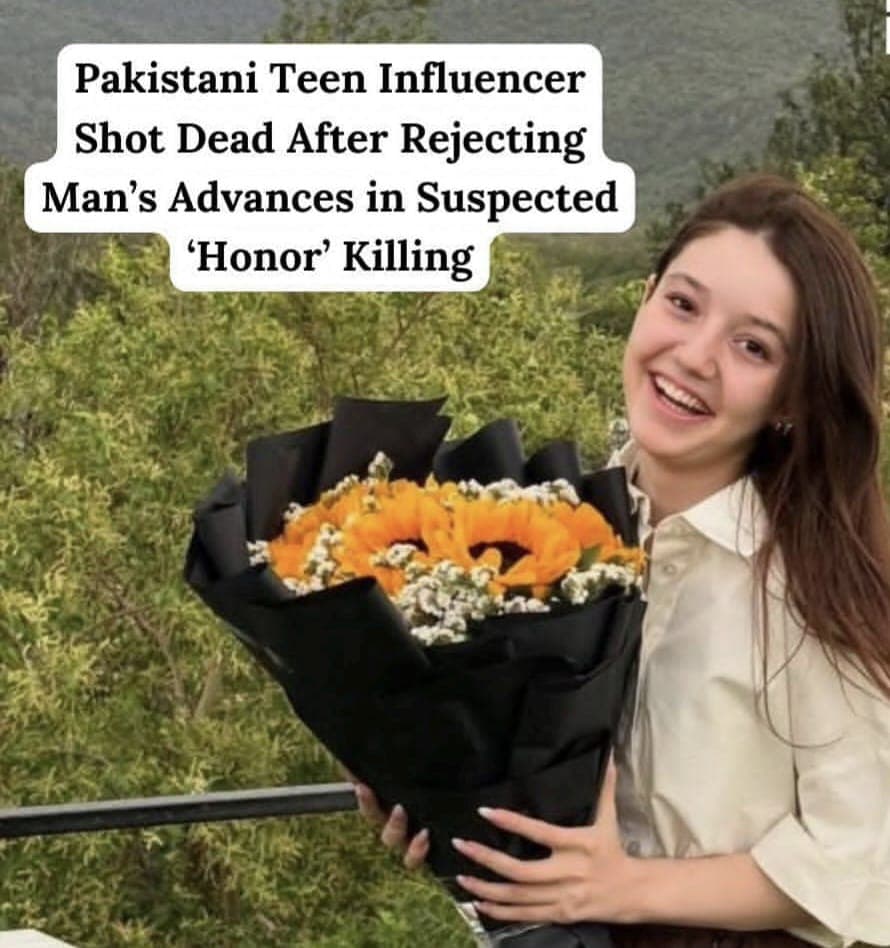
Patriarchy, Honor, and the Quiet Struggle for Change in Pakistan Lahore-based journalist Anum Hanif understands patriarchy in Pakistan not as a theoretical concept, but as something deeply woven into daily life. In her view, patriarchy means men have more power within families, workplaces, and institutions, shaping who gets to make decisions and who has to justify their choices. It quietly controls things like education, mobility, and professional credibility. Even as more women enter universities and offices, many still face bias and must work harder to prove they deserve leadership or independence.

Pakistan, however, cannot be reduced to a single narrative. Urban families in cities increasingly encourage daughters and sons equally, while rural communities often hold on to older expectations that place more restrictions on women. These differences show how patriarchy can shift from strict rules in one region to subtler pressures in another. Honor-based violence represents one extreme form of patriarchal control, but the mindset behind it is present long before any tragedy occurs. Patriarchy often decides whose decisions are respected, whose desires are suspicious, and whose autonomy is seen as a threat to family honor. It is less about individual choices and more about the social consequences attached to them. In mid-2025, a disturbing video circulated online from Quetta showing a couple being killed, allegedly on the orders of a jirga. The footage spread quickly, forcing attention onto a case that might otherwise have remained hidden or denied. The incident revealed familiar themes: control over personal relationships, public punishment, and weak accountability. The arrest of the jirga leader marked a rare moment when exposure disrupted silence, reminding people that media visibility can alter outcomes—if only slightly. Cultural sensitivities place limits on how such stories are discussed. In communities where women are not expected to speak or decide for themselves, the idea of a woman choosing her own partner, career, or lifestyle becomes a form of challenge. Anyone who questions these expectations—whether a woman herself or someone writing about her—can be perceived as disrupting social order. In this way, silence becomes a tool to protect both tradition and power. Misconceptions outside Pakistan often reduce honor killings to religion or assume widespread acceptance. Hanif rejects both ideas. These acts, she argues, have more to do with cultural norms, male authority, and community pressure than with faith. In reality, many Pakistanis condemn such violence, and activists, journalists, and younger generations increasingly criticize it openly. Change does not arrive in sweeping statements or sudden reforms. It appears gradually: families debating marriage choices, young people questioning gender roles, online discussions challenging old assumptions. Social media, education, and global exposure have helped create new spaces where equality feels thinkable, even if not immediately achievable. Journalism, in this landscape, cannot dismantle patriarchy on its own. But it can interrupt silence, document resistance, and hold up a mirror to practices that thrive in darkness. By reporting cases, verifying facts, and protecting victims’ dignity, journalists create a record that makes denial harder and accountability slightly more possible. Even small shifts matter, especially in societies where tradition often outweighs individual freedom. For Hanif, reporting on these issues has shaped how she sees society and her role in it. It has strengthened her awareness of injustice and deepened her belief in fairness, accuracy, and human rights. It has pushed her to question customs that are inherited but rarely examined. The work may not transform everything at once, but it steadily expands the space for critique—and for voices that have long been ignored. In the end, patriarchy in Pakistan is not only about shocking crimes or extreme stories. It lives in daily decisions, family expectations, and unwritten rules that carry the weight of honor. But it also lives in the questions being asked today that were not asked twenty years ago. That quiet shift may be slow, but it is real—and it suggests that the meaning of honor is no longer unchallenged, even in the places where it once felt untouchable.