
When Education Became Conditional for Women
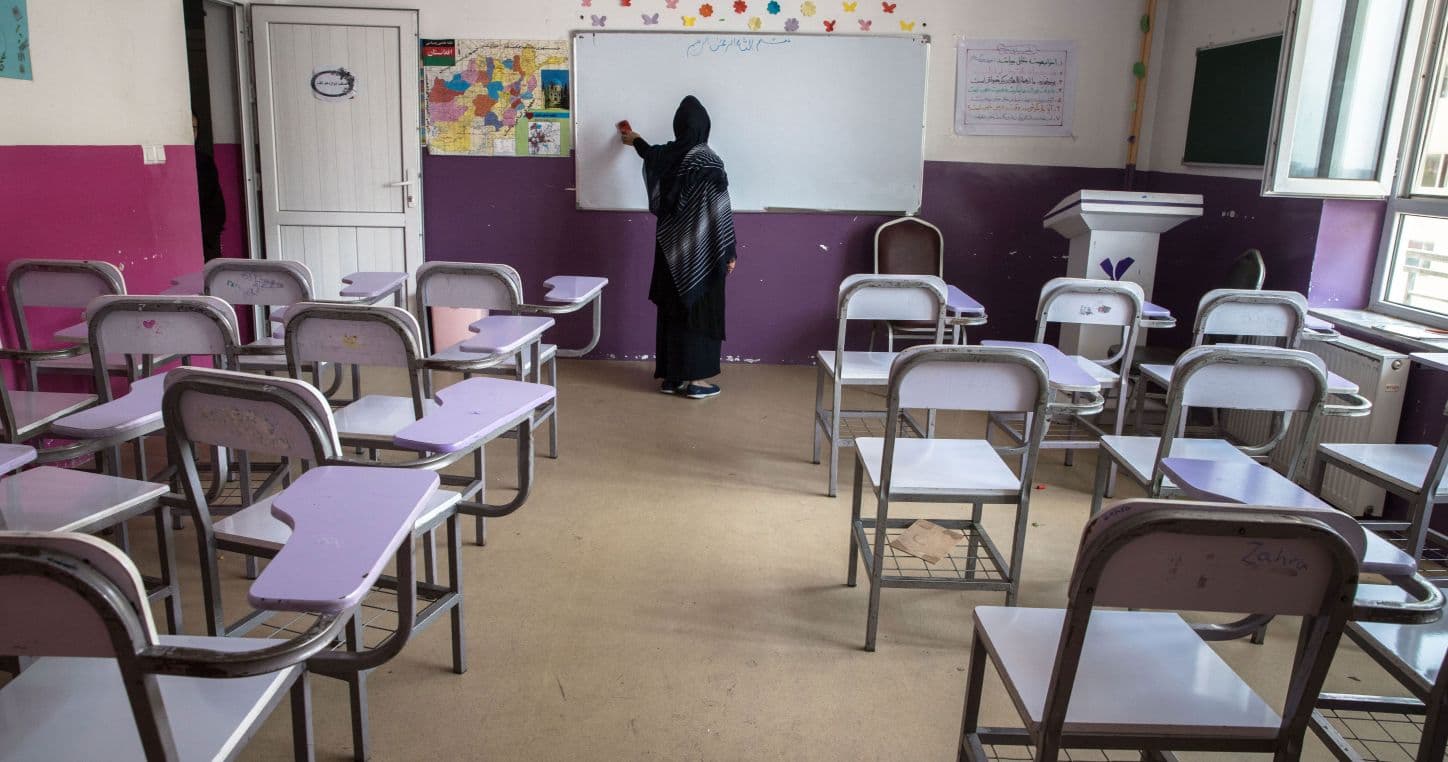
Roya Shahdis is twenty-five years old, and teaching has always been part of her life. She began teaching English at a young age, not because it was easy, but because it felt natural. Language, for her, was a bridge—between people, between ideas, between possibility and reality. She believes deeply in face-to-face teaching. In a classroom, she says, learning is not only about words on a board. It is about eye contact, tone, silence, and attention. A teacher can see confusion before it becomes failure. A student can feel seen. This connection, she believes, is what makes education meaningful. Before the restrictions, her classes included students from both genders. Learning felt shared. The classroom was one of the few spaces where difference did not immediately turn into separation. Teaching did not feel political. It felt human. Then the restrictions arrived quietly. One by one, her students began calling. Their voices carried hesitation and apology. They told her they could no longer attend classes in person. The conditions were no longer there. Doors that had once been open closed without explanation. Roya listened to their fear and their disappointment. What stayed with her most was their eagerness. They still wanted to learn. They still wanted to show up. So she adjusted. She moved her classes online, knowing it was not ideal, but believing it was better than nothing. Online teaching kept education alive, but only barely. Internet connections failed without warning. Voices disappeared mid-sentence. Screens froze during important explanations. Sometimes students could not understand her—not because of language, but because the connection collapsed. Other obstacles followed. Some students were not allowed to own mobile phones. Some shared a single phone among family members. Others had phones but no internet, because their families could not afford it. Education became dependent on electricity, money, permission, and silence. Her income dropped almost by half. She accepted it without negotiation. There was nothing to negotiate. Teaching was the only work she could do, and even that had been reduced to fragments. She continued because stopping felt worse. Patriarchy, Roya says, did not begin with the Taliban. It existed long before, layered into everyday life. But after the Taliban, it became heavier—more visible, more forceful. Decisions that should belong to a woman were increasingly made by men: what to wear, where to go, when to leave the house, even how to think. “In the beginning, it was unbearable,” she says. “But when you have no other option, you get used to everything.” What changed was not only public law, but private life. Families became stricter. Control moved inside homes. Restrictions were no longer enforced only by armed men, but by relatives, neighbors, and fear. The impact on her mental health was immediate and overwhelming. She had passed the university entrance exam. She was already attending university. She was building a future step by step. Then the announcement came: women were no longer allowed to attend universities. The loss was sudden and absolute. For days, she cried without stopping. For one week, she did not eat. Time lost shape. When she looks back now, it feels unreal—like a nightmare where everything you love is taken, and you are told it was never yours to begin with. “You must stay home,” she remembers being told. “Women’s place is home. Women’s place is the kitchen.” Loneliness followed quickly. She stopped speaking. Going outside felt unsafe, unnecessary, even dangerous. The connection between her and the outside world weakened until it nearly disappeared. Silence became routine. In that silence, she reached for books. She began reading novels—not academic texts, not self-help, just stories. Fiction became a way to feel connected again. Through other lives, she remembered her own. Reading did not change her situation, but it reminded her that the world was larger than her room. Teaching remained the one thing that grounded her. Despite everything, she continued teaching online. Each lesson felt like resistance—not loud or visible, but persistent. When a student understood a concept, when a sentence finally made sense, she felt a quiet satisfaction. “If the situation gets better,” she says, “I want to teach in person again.”
It does not matter to her where. Any city. Any classroom. She dreams of teaching at a university, standing in front of students, speaking freely. Teaching makes her feel powerful, not in the sense of control, but in the sense of ownership over her own life. “When I teach,” she says, “I feel that I am a power for myself.” She believes in the effectiveness of her work. She sees it in her students’ progress, in their confidence. Today, she teaches members of an entire family—learning together, growing together. Watching them advance reminds her that education still matters, even when it is fragile. For now, she teaches online. She reads. She waits. She holds onto the hope that one day she will stand in a classroom again, look at her students, and teach without fear. Because for Roya, teaching is not just a profession. It is the place where her voice remains free.