
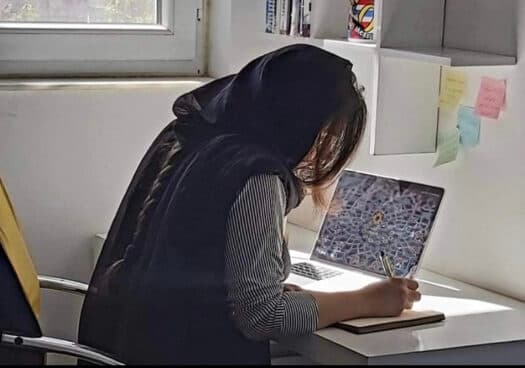
When Gender Became a Barrier to Study Husnia Hussaini is 25 years old. She was in her third year of computer science when the Taliban took over Afghanistan and she could not finish her studies. She wanted to become a computer engineer. She believes that university is an important stage of life for everyone, and that to achieve the goals people set for them, university is an essential institution that everyone should be able to attend. When Husnia realized that universities were closed to girls, she experienced a deep feeling of hopelessness. She says that in that moment, the entire path she had traveled until then flashed before her eyes. All the years of studying, planning, and dreaming suddenly felt meaningless. When she compares herself to girls of her age in other countries who are continuing their education, she feels an intense sadness and keeps asking herself the same question: why? What is the difference between us?
Today, Husnia does not have a specific activity outside the home. She spends most of her time at home, busy with housework. She describes this situation as very hard to endure. It was especially painful for her to see how her parents’ expectations slowly faded as she started to stay home. In the beginning, this situation was very difficult for her family to accept. Her father tried to help by suggesting different activities he saw around them, hoping to protect his daughters from depression. Her mother searched for online courses and online university programs, trying to keep them mentally active and hopeful. Currently, Husnia is studying in limited ways. She is taking online English language classes and also attends in-person courses that are held secretly under the name of religious schools. These courses exist in constant fear. She knows that if the Taliban find out about them, they will be closed immediately. This uncertainty follows her every day and makes it hard to feel safe even while learning. Her biggest fear is the feeling of doing nothing. She is afraid that her life is passing while she remains stuck at home, unable to move forward. She says that if one day she is allowed to study again, she will immediately return to her path, plans her future, and work toward achieving her goals. Husnia believes that society’s view of women has changed significantly. She says that now there is a Taliban mindset living inside every house. According to her, Taliban ideology has slowly entered people’s minds and daily lives. Women are often blamed by their families even before any external pressure. Control over women has become normalised within households. Before the restrictions, Husnia says that gender was not an issue. No one told her she could not do something because she was a woman, especially in academic environments. At university, everything was available to them, and students were focused on their studies and personal ambitions. She could go anywhere she needed without fear or restriction. That sense of freedom now feels distant, but it remains a clear memory of what life once looked like.