
What Remained When Tabasum Café Closed?
Tabasum Cultural Café was founded by a woman and run by women. Eight of them worked there. Some had never earned their own income before. Some had never spent full days outside their homes without fear. Inside the café, they worked, talked, planned, and imagined futures that extended beyond survival. It was not a protest space. It did not need to be. In a country where women’s presence is constantly negotiated, the café itself was enough to disrupt the order. Women working. Women earning. Women being seen. When it opened, the response was immediate. Media outlets inside and outside Afghanistan covered it. Social media amplified it. People supported it openly. For a brief moment, possibility felt real—not abstract, but lived. Then the Taliban returned. Restrictions did not arrive all at once. They came in layers, work first, then education, then movement, then visibility itself. Gender slowly became a border women were not allowed to cross. The café was closed. There was no explanation that required understanding. It was clear enough: women could no longer occupy public space on their own terms. By closing the café, the Taliban did not only shut down a business. They dismantled a small system of independence. Eight women lost their jobs. But more quietly, they lost permission to exist outside their homes. After that, days grew heavier. “We all started staying at home,” she told me. The sentence was simple, but it carried weight. Home was no longer a choice—it was a limit. She stayed in Afghanistan for four to five months after the takeover. During that time, gender control became visible in its most ordinary form: waiting. Waiting to see what rule would come next. Waiting to see if hope still had space to survive. Silence was expected. She refused it. She joined protests against the bans on women’s work, education, and presence. In the streets, women stood together knowing they were already marked as disobedient simply for showing up.
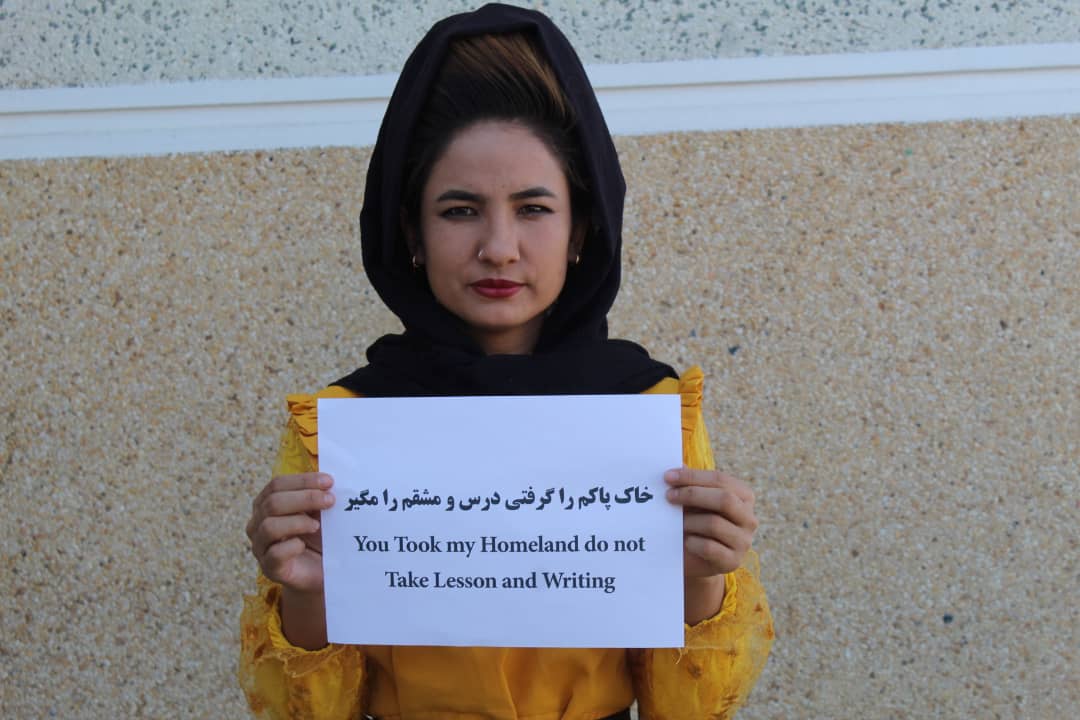
The response was violent. Taliban forces harassed protesters physically and verbally. Tear gas was used. Women were arrested. They were insulted, called “whores,” stripped of dignity through language meant to shame and isolate them. This is how gender control speaks: not only through weapons, but through words that turn resistance into something dishonorable. Threats followed her protests. Staying became dangerous. Leaving became necessary. Iran was not chosen because it promised safety or freedom, but because it was close enough to reach. She left Kabul by road, moving quietly, knowing that being found could mean imprisonment or death. The Taliban never located her. That absence—temporary and fragile—saved her life. What she carried with her was not only fear, but memory: of a café, of eight women, of a life interrupted. Yet she does not speak from a place of defeat. “No power can destroy the will and dreams of Afghan women,” she said. “Even in the darkest days, we must not lose faith, awareness, and resilience.”